Grinding Wheel Safety: Respect The Maximum Speed
One potential source of serious injury in grinding comes from an oversight that is easy to make: operating the wheel in an over-speed condition.
Share


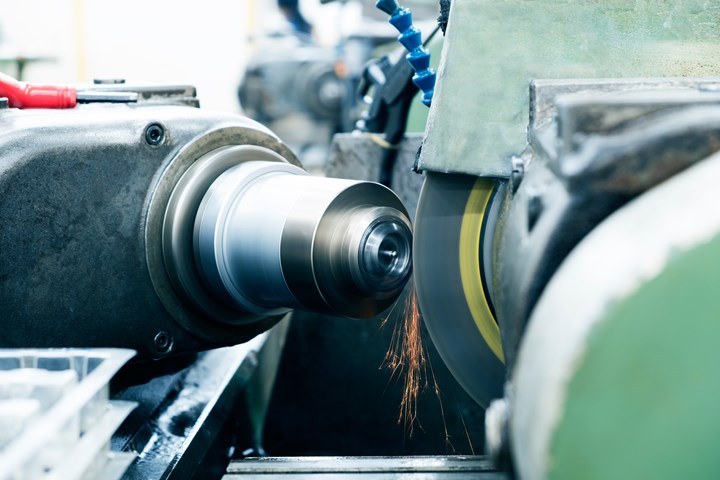
One potential source of serious injury in grinding comes from an oversight that is easy to make: operating the wheel in an over-speed condition. While a wheel that is run far enough in excess of its rated maximum speed may shatter within minutes of operation, danger may also result from a wheel run just slightly faster than its rated speed. This less severe over-speed condition can cause the wheel to be damaged, and the damage may result in breakage after further use. For example, operating a reinforced, 9-inch diameter, Type 27 wheel rated for a maximum speed of 6,600 rpm on a 7-inch angle grinder with a speed of 7,700 rpm can cause the wheel to crack. This cracking can lead to breakage later.
What other actions lead to an over-speed condition?
The following actions—all of which are not recommended—can also lead to an over-speed condition:


- Mounting the grinding wheel on a sander, such as a “pistol grip” air sander
- Mounting the wheel directly on an electric motor
- Mounting the wheel on the wrong machine size for that wheel
- Failing to properly maintain machine components, particularly governors on pneumatic machines and linkages on floorstand machines
- Using the incorrect air, hydraulic or electric power supply
- Using an improper speed setting on the machine
Any of these actions sets up a disastrous scenario that could lead to an accident involving serious injury or death.
The hazard of running in an over-speed condition comes from centrifugal force. A result of rotary motion, centrifugal force is what causes a weight on the end of a string to pull the string taught when the weight is swung in a circle. This same force causes the mass of the grinding wheel to be pulled outward from the center of rotation as the wheel is spinning.
Danger comes from the fact that centrifugal force does not increase in direct proportion to an increase in speed, but instead it increases as the square of that speed increase. When rotational speed doubles, centrifugal force quadruples. This effect means that relatively small changes in speed can produce significant increases in force. In the example mentioned, changing from 6,600 rpm to 7,700 rpm multiplies the speed by 1.167. However, the corresponding centrifugal force would multiply by a factor of 1.167 × 1.167, or 1.36.
To take a more extreme example, consider the same wheel with a maximum safe operating speed of 6,600 rpm run on a 5-inch right angle grinder at 10,000 rpm. This represents an over-speed of about 1.5 times the wheel’s designed speed. But the corresponding centrifugal force—and the corresponding rotational stress on the wheel—would be about 2.3 times as much as the maximum allowed.
In short, never over-speed a grinding wheel. The speed of the grinder must be compared to the speed marked on the wheel or package to make sure the machine’s speed is at or below the maximum operating speed of the wheel. Surpassing this rating risks not just wheel breakage but also the safety of shop personnel.
About the Author
Roger Cloutier is a senior product safety engineer for the Norton Abrasives brand of Saint-Gobain Abrasives in Worchester, Massachusetts.


Related Content

Orthopedic Event Discusses Manufacturing Strategies
At the seminar, representatives from multiple companies discussed strategies for making orthopedic devices accurately and efficiently.
Read More
10 Robotic Solutions You Can Find at IMTS 2026
Discover how today’s robots and cobots are making it easier than ever to automate tasks, free up skilled workers, and run machines unattended – even in small and midsized shops.
Read More
Automation is for Everyone
Not just for large shops, automation can help even the smallest shops solve labor challenges and become more profitable and efficient.
Read More
How to Determine the Currently Active Work Offset Number
Determining the currently active work offset number is practical when the program zero point is changing between workpieces in a production run.
Read MoreRead Next

Choosing The Right Grinding Wheel
Understanding grinding wheel fundamentals will help you choose the right wheel for the job.
Read More
OEM Tour Video: Lean Manufacturing for Measurement and Metrology
How can a facility that requires manual work for some long-standing parts be made more efficient? Join us as we look inside The L. S. Starrett Company’s headquarters in Athol, Massachusetts, and see how this long-established OEM is updating its processes.
Read More