
Bloodhound Fin Support Machined with Vortex
Machining strategy contributes to 40 percent cycle time saving on large five-axis aluminum part.


Share


Phillips Corporation
Featured Content
View More


Phillips Corporation - Education
Featured Content
View More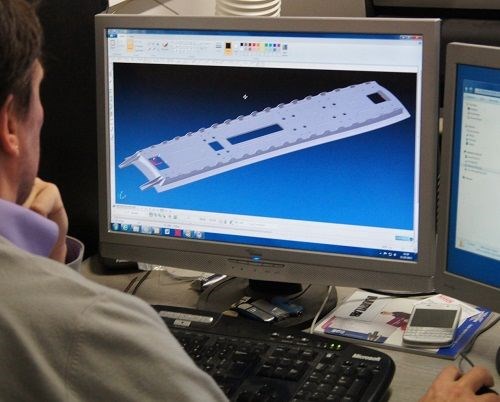
Five-axis machining may be challenging, but it’s not rocket science. Except when it is.
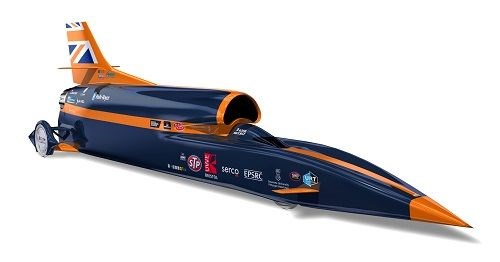
The Bloodhound is a 1,000-mile-per-hour rocket-powered car being developed to break the world land speed record, possibly this year. Though it’s named for a surface-to-air missile, the Bloodhound car will maintain missile-like speed entirely on the surface.


We’ve reported before on a leading-edge part made for this car. News of one of the latest examples of an unusual part for this car come from Delcam, whose PowerMill software and Vortex machining strategy figured into the five-axis machining of a tail-fin shear plate that will support the car’s large vertical fin at full speed.
The part shown on the screen in the previous image supports the car’s large vertical fin against the drag at full speed. Find images of the completed machined part posted here.
According to this BBC report, the aluminum plate—machined by Manufax Engineering on a Correa five-axis gantry-type—is more than 2 meters long by 400 mm wide, but only 2 mm thick in some places, and precisely curved to follow the contour of the chassis. An aluminum block weighing 750 kg was milled down to less than 9 kg to make this part.
Delcam says the combination of tooling from SGS and tool paths achieving efficient engagement through Vortex allowed the part to be machined with over 40 percent less cycle time than it would have otherwise required.
Related Content
-
4+2 Machining Cuts Cycle Times From Days to Minutes
By moving from legacy jig bores and tilt tables to a milling and boring machine, Highland Manufacturing cut cycle times from days to minutes on high-tolerance, large-diameter parts.
-
The Benefits of In-House Toolmaking
The addition of two larger gantry routers has enabled a maker of rubber belting products to produce more tooling in-house, reducing lead times and costs for itself and its sister facilities.
-
A History of Precision: The Invention and Evolution of Swiss-Style Machining
In the late 1800s, a new technology — Swiss-type machines — emerged to serve Switzerland’s growing watchmaking industry. Today, Swiss-machined parts are ubiquitous, and there’s a good reason for that: No other machining technology can produce tiny, complex components more efficiently or at higher quality.


