
Dillon's Full-Grip Chuck Jaws Reduce Part Distortion
Dillon Full-Grip Jaws are ideal for high-speed machining, as well as precision boring, tapping, drilling and finishing across most industrial markets.

Share


Phillips Corporation
Featured Content
View More


Phillips Corporation - Education
Featured Content
View More

Dillon Manufacturing’s line of full-grip jaws are available in various materials in both standard and custom configurations to suit varied workholding applications.
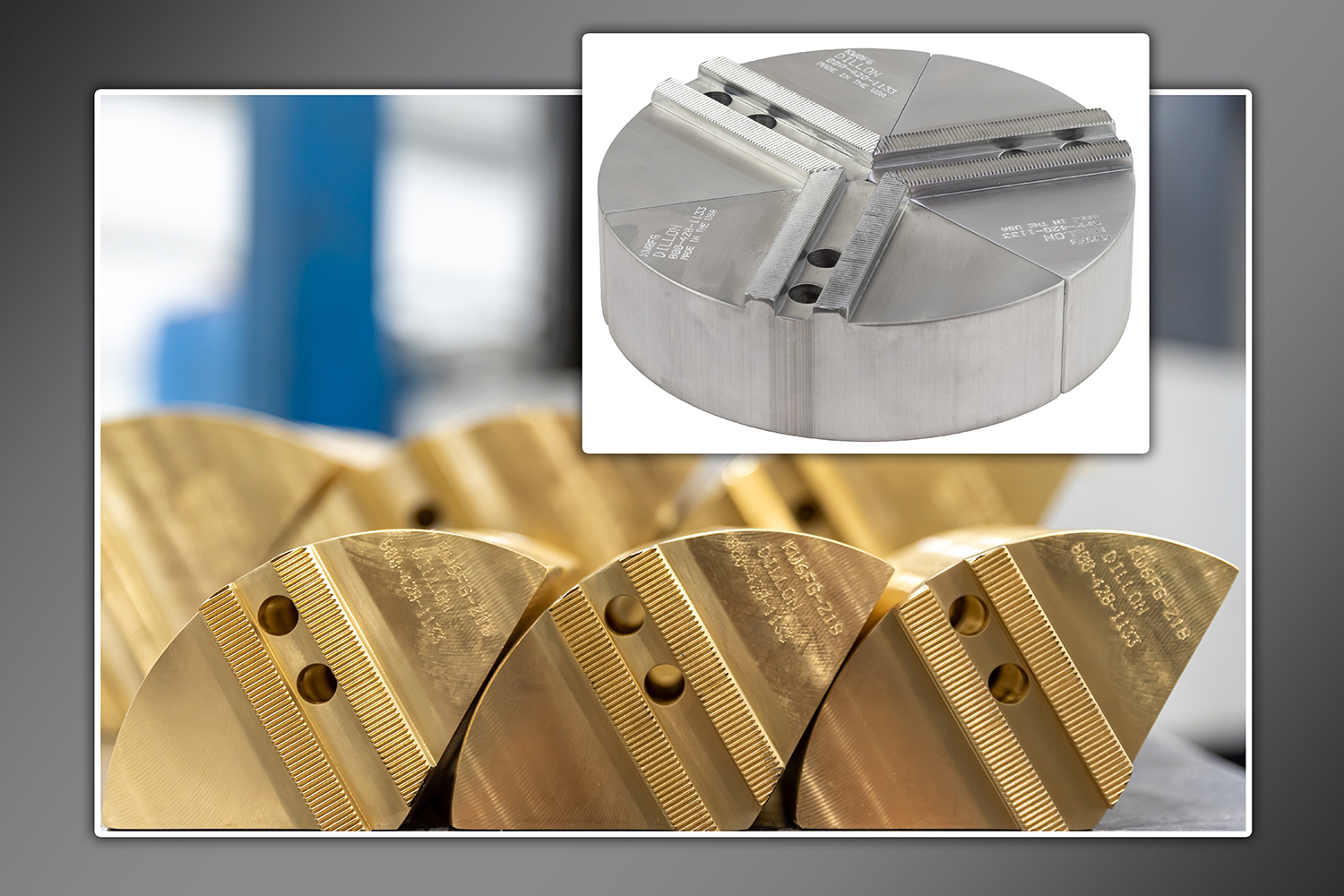
With maximum contact area for a solid gripping surface, these full-grip jaws are said to provide more friction for drive with reduced part distortion. Manufactured from 6061 aluminum, 1018 steel, cast iron and brass, Dillon Full-Grip Jaws will not mark or mar the workpiece surface. Standard sizes are available to up 32" in diameter. Custom designs available with special heights, diameters, materials and configuration can securely grip any workpiece, including a matching serration location which is exactly perpendicular to the slots. In addition, these special full-grip jaws can reduce and simplify set-up times. Dillon says its full-grip chuck jaws are made in the U.S. with industry-leading lead times. They are ideal for high-speed machining, as well as precision boring, tapping, drilling and finishing across most industrial markets.
These wrap-around type top jaws distribute more of the gripping pressure across the workpiece, reducing part distortion. Dillon standard and custom full-grip jaws are available in serrated, tongue and groove serrated, Acme serrated and square serrated designs.
Related Content
-
Finding the Right Tools for a Turning Shop
Xcelicut is a startup shop that has grown thanks to the right machines, cutting tools, grants and other resources.
-
From Manual to Hydraulic: Upgraded Design Propels Production
Hydraulic ARROW® Workholding Fixtures and ClampMAX® Power Systems reduced load/unload times by 50%, boosted throughput from 4 to 8.5 parts per hour, and took operator skill out of the equation.
-
The Future of Machine Shop Automation: Why Flexibility Remains the Competitive Advantage
Almost any shop can automate at least some of its production, even in low-volume, high-mix applications. The key to getting started is finding the simplest solutions that fit your requirements. It helps to work with an automation partner that understands your needs.


