Buying a VMC: The Basics of Spindle Speeds and Tapers
What’s the difference between CAT, BT and HSK tapers? These and other questions are important when considering a new vertical machining center.
Share


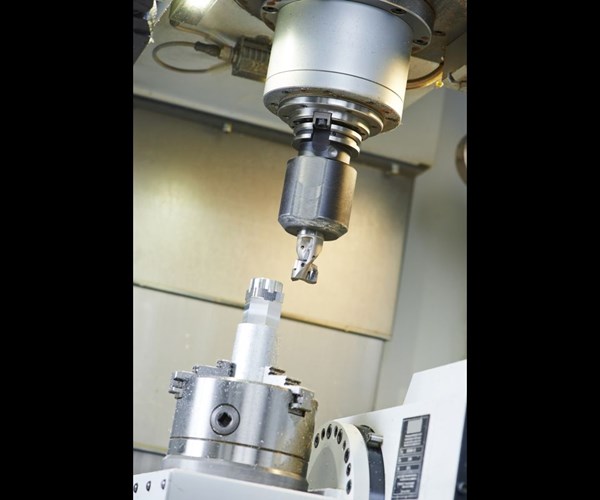
Whether it’s for a toolroom, a job shop or a production house, there are a lot of factors to consider when it comes to acquiring a vertical machining center (VMC). Key preliminary considerations include the intended application and workpiece(s) and the needs of a shop’s various departments. And then there’s the research and data-gathering process.
In addition to characteristics like structure and stability, potential VMC buyers should be aware of machine spindle considerations.


Spindle Speeds, Torque and Horsepower
Selecting a machine with the appropriate range of spindle speeds is a critical consideration. The trends in recent years have been toward coated tooling, smaller tools, shallower depths of cut and higher feed rates. Smaller tools require a higher spindle speed. Faster feeds and speeds deliver better surface finishes. High-speed machining requires less spindle horsepower and torque (twisting force) when taking smaller cuts.
In contrast, large-diameter tools such as face milling cutters typically use slower spindle speeds and take deeper cuts to remove larger amounts of material. However, this mode may require greater machine rigidity. Moreover, large tools generally require more horsepower and torque. In addition, large-diameter taps must run at lower rotations per minute (rpm), which calls for higher torque. Alternatively, thread milling can be done at higher speeds, (nearly the same feeds and speeds as a regular end mill), thus requiring less torque. Charts are provided by all machine builders to show the available spindle torque in relation to horsepower and spindle speed. Study them closely.
CAT, BT and HSK
After selecting the spindle that best meets the horsepower, spindle speed and torque requirements comes selecting the type or style of tooling taper and its size. Tooling taper refers to the peculiar cone shape of the portion of a toolholder that fits inside the opening of the spindle. Every spindle is designed to accept a certain standardized taper style and size. Other styles or sizes cannot be used. Three taper styles are primarily used today: CAT, BT and HSK. The specifications for these tapers are governed by national and international standards.
- CAT and BT tooling are referred to as V-flange holders, and are the most widely accepted standard for milling in the United States. The BT metric series is the Japanese equivalent and is prevalent overseas, particularly in Europe, where it was originally developed. Both CAT and BT toolholders require a retention knob or pull stud to be secured within the machine spindle.
- HSK is a German standard meaning “hollow shank taper.” The tapered portion of the holder is much shorter and it engages the spindle in a different manner by using no pull stud or retention knob. The HSK holder was developed to provide greater repeatability and longer tool life, especially in high-speed machining applications.
There are limitations and advantages to using any of the three tooling types. Price, availability, accuracy and repeatability vary from style to style. The proper selection is usually based on the application.
Selecting the Spindle Taper Size
The size of the spindle taper and the corresponding shank taper has much to do with the weight and length of the tools being used and the amount of material to be removed. Although CAT40 is the most commonly used size in the United States, if you already own, say, the equivalent 300 BT30 shanks in your shop, there would be little or no advantage to selecting a CAT40 spindle in a new machine. If you plan to use 3-inch-diameter or larger cutters, take deep cuts, or use tools that are more than 20 inches long, a CAT50 taper would probably be best. Using a holder of this size for heavy or long tools helps prevent excessive side loads on the spindle bearings. (This problem is more common with horizontal machines on which tool droop can add to unwanted forces.)
Do Your Research
Techspex.com, a free research center and analysis tool, can help a shop find the right VMC for the job. Simply enter the basic attributes and specifications that are required, and the system will provide a side-by-side comparison by machine type, model and builder. Users can register for free.
This is part two of a three-part series about buying a VMC.
- Part one: Considering Structure and Stability
- Part three: Considering Toolchanger, Coolant Delivery and Chip Removal
Find more insights about acquiring a new machining center by visiting the Techspex Knowledge Center, “Guide to Buying Machine Tools.”
This blog post was adapted from an article by Barry Rogers published in the Machine/Shop supplement to Modern Machine Shop magazine.


Related Content

Orthopedic Event Discusses Manufacturing Strategies
At the seminar, representatives from multiple companies discussed strategies for making orthopedic devices accurately and efficiently.
Read More
A History of Precision: The Invention and Evolution of Swiss-Style Machining
In the late 1800s, a new technology — Swiss-type machines — emerged to serve Switzerland’s growing watchmaking industry. Today, Swiss-machined parts are ubiquitous, and there’s a good reason for that: No other machining technology can produce tiny, complex components more efficiently or at higher quality.
Read More
How to Determine the Currently Active Work Offset Number
Determining the currently active work offset number is practical when the program zero point is changing between workpieces in a production run.
Read More
4 Commonly Misapplied CNC Features
Misapplication of these important CNC features will result in wasted time, wasted or duplicated effort and/or wasted material.
Read MoreRead Next

OEM Tour Video: Lean Manufacturing for Measurement and Metrology
How can a facility that requires manual work for some long-standing parts be made more efficient? Join us as we look inside The L. S. Starrett Company’s headquarters in Athol, Massachusetts, and see how this long-established OEM is updating its processes.
Read More