GTI Spindle Technology Opens North Carolina Facility
The company is hosting an open house in August 2016.

Share


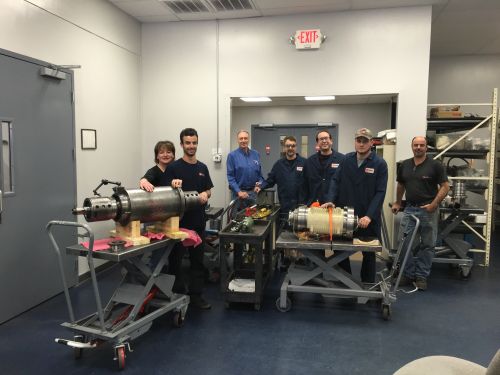
GTI Spindle Technology Inc. has announced that its newly-opened North Carolina facility is now fully operational. The facility is staffed with technicians that are capable of repairing and rebuilding high-precision spindles, including those made by Makino, Mazak, Kessler, Gamfior, Enshu and OKK.
The new facility also provides on-site predictive maintenance services, including vibration analysis routes for customers that want to ensure maximum uptime and reliability for their facilities. The predictive maintenance services are combined with spindle repair capabilities to ensure no asset is out of commission at an inopportune time, says the company.
GTI inspects, repairs and remanufactures spindles and other precision rotating assemblies including super precision, high-frequency motorized-, belt- and gear-driven spindles with special emphasis on Japanese, German and Italian high-speed machining centers. The new location provides an extension to serve the company’s Southeast U.S. customers.
The facility is hosting an open house in August. Those in attendance will see the facilities and meet the technicians that work on spindles repaired at the new facility.
Related Content
-
Enhancing the Shop Floor with AI
How can AI and digital twins use data gathered on the shop floor? Learn how these digital tools can improve efficiency through programming, maintenance, sustainability and more.
-
Leveraging Data to Drive Manufacturing Innovation
Global manufacturer Fictiv is rapidly expanding its use of data and artificial intelligence to help manufacturers wade through process variables and production strategies. With the release of a new AI platform for material selection, Fictive CEO Dave Evans talks about how the company is leveraging data to unlock creative problem solving for manufacturers.
-
5 Stages of a Closed-Loop CNC Machining Cell
Controlling variability in a closed-loop manufacturing process requires inspection data collected before, during and immediately after machining — and a means to act on that data in real time. Here’s one system that accomplishes this.


