Sandvik Coromant Turning Grade Provides High-Feed Roughing
The GC4405 steel turning grade features a new carbide substrate with an optimized microstructure, which reduces plastic deformation in high-feed applications.

Share


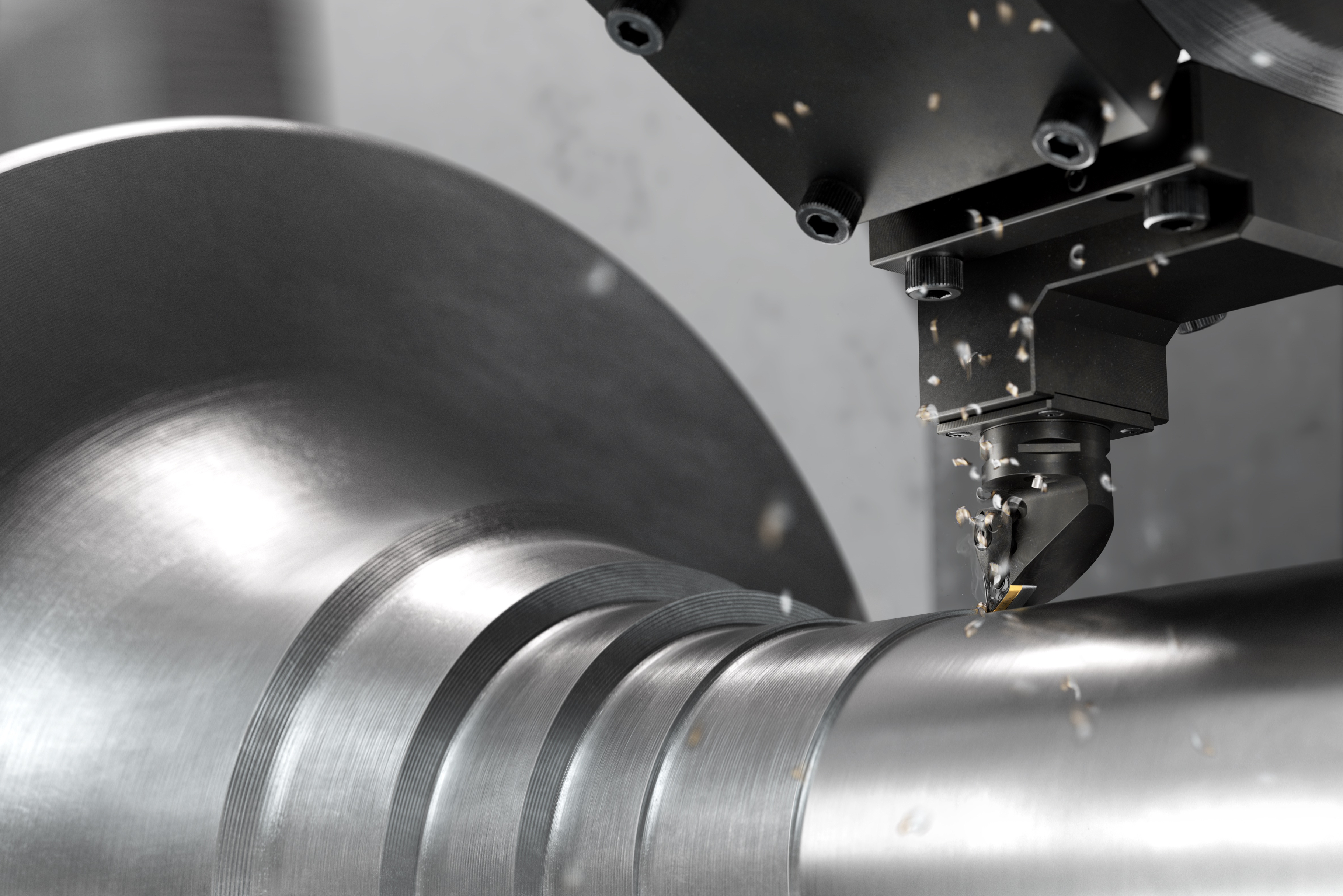
Sandvik Coromant’s GC4405 steel turning grade is designed to provide high metal removal rates in stable conditions, particularly in harder steels. The option to machine dry in softer steels also offers opportunities for more sustainable machining.
According to Sandvik Coromant, Grade GC4405 should be applied as a high-feed productivity optimizer with high metal removal rates in stable conditions with demanding plastic deformation properties.


The GC4405 features a new carbide substrate with optimized microstructure, which reduces plastic deformation in high-feed applications, enabling an expansion in the application range toward harder steels and higher productivity compared to the existing grade GC4305.
The new grade GC4405 features the second-generation Inveio technology coating, which is designed to combat crater wear common to P05 applications. What makes the second-generation Inveio different from the earlier generation is the alumina coating, where the crystals are aligned even more vertically toward the top surface to improve wear resistance, offering more consistent quality and performance.
Grade GC4405 is recommended for continuous roughing to semi-finishing in stable conditions and long time in cut. It is suitable for high-feed machining with medium, roughing or wiper geometries in harder steels above 300 HB, or for high-feed and/or high-speed machining in softer steels below 300 HB.
The grade is ideally applied in ISO application area P05 (P01–P10). It is optimized for P2.5 low-alloy hardened steel but also recommended for high-productivity applications in low-alloy P2.1 and unalloyed P1.2 steel.
Related Content
-
Understanding Process Damping in Milling Operations
Despite the advances in modeling machining operations over the past decades, process damping remains a topic of interest, including new tool designs that increase the effect.
-
A New Frontier in Surface Finish Control
What if your machine tool could measure surface roughness as it cuts? This article explores how in-process metrology is advancing from concept to reality, enabling real-time feedback, immediate detection of anomalies and new levels of control over surface quality. Discover the technologies making this possible.
-
Briquetting Manufacturer Tools Up for Faster Turnaround Times
To cut out laborious manual processes like hand-grinding, this briquette manufacturer revamped its machining and cutting tool arsenal for faster production.


