
Automating Time Studies
This company has created a system that replaces the stopwatch and clipboard system of time study and the manual data transfer and analysis process.

Share


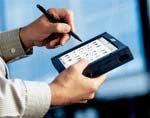
Using a handheld computer, this software package eliminates the need for the traditional time study stopwatch and clipboard. Observations can be made quickly and accurately.
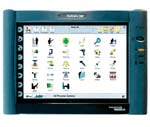
Icons on the computer touch screen identify the process elements. A simple touch of the icon registers the data. Value and non-value operations are automatically sorted.
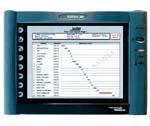
Shown is a sample of the many different reports that can be generated from the time study data. Automating the time study process allows problems to be identified and remedied in hours rather than days. Cost analysis for a job quotation is also accelerated using this system.
Time studies have pretty much been done the same way since the late 1800s. Back then, time and methods engineering pioneer Frederick Taylor first used a stopwatch and paper to time and record various operations in a Philadelphia steel mill. The simple idea was, and still is, to standardize and thereby optimize operations within the manufacturing environment.
If Mr. Taylor were to come back and perform time studies today, he would feel very much at home. With the possible addition of a clipboard, to aid data recording, the tools of the time study trade—stopwatch and paper—have been virtually unchanged in more than a century.


Once the observations from the time study are recorded, the next step in the traditional process is to transfer the information to a usable format. Historically this is a manual process of transferring the raw time study data into a chronological and readable form. Human error is of high potential during this phase of the process.
With the data transferred, analysis begins. This consists of integrating the information from the time study in sequence charts, graphs, diagrams, flow charts, descriptions and analyses in order to identify problems and recommend changes to the process.
Advanced Time Studies, a Washington company, has created a system that replaces the stopwatch and clipboard system of time study and the manual data transfer and analysis process. The new program is called AccuStudy.
AccuStudy is a software program developed to run on a variety of handheld, touch screen computers. Many of these computers are ideally suited for industrial environments and use Microsoft CE as the operating system. The handheld shown in this article is the PenCentra 200 from Fujitsu.
In operation, the software allows the time studier to identify an icon on the handheld computer screen and touch it while continuing observations for the next process step. Eliminating the need to read the watch and record the time allows studies of close elements without the need to observe numerous iterations to get the times. Sequentially observed timed data can be entered to 1-second accuracy.
The software is able to store as few as one or as many as 10,000 processes or components. Based on the icon system, corresponding value and non-value ratings are automatically entered into the data bank with the observed time.
Once the raw data is gathered, the software is able to provide "instant" analysis of the process from beginning to end. Output is generated into sequential order and then into familiar and useful charts, graphs, descriptions and reports that help identify areas of opportunity for process optimization. These include Gantt, value/non-value activity, choke points in the process, averaging and ISO 9000 method worksheets.
Automating the time study process compresses the turn around of information within the manufacturing enterprise. Problems can be fixed in hours rather than weeks.
Moreover, data gathered from the shop floor can also impact the accurate costing of quotation for additional work. Compressing this bidding process is increasingly important to shops, especially in the current manufacturing environment.


Related Content

Machine Monitoring Integrates With ERP to Reduce Errors
By investing in machine monitoring that links machine data with the shop’s ERP system, this machine shop broke down communication barriers and dramatically reduced errors.
Read More
Refining Shopfloor Processes for Mission-Critical Parts
Pacon Mfg, Inc. has not rested on its laurels as the 2020 Top Shop Honoree for Shopfloor Practices and Performance. In the years since, it has refined its processes to continue excelling in a volatile market.
Read More
Scaling Up Without Starting From Scratch
In its quest to become a single source for all its customers, sheet metal fabricator GTR Manufacturing long considered bringing machining in house, but a lack of space and expertise held it back – until it found the perfect solution.
Read More
How a Family-Owned Tooling Company Competes with Global Giants (Includes Video)
Not ready to go digital? Consider this: With Siemens NX ecosystem, precision shop D’Andrea cut its programming time by 50% and is able to compete globally—even against industry giants.
Read More