Share


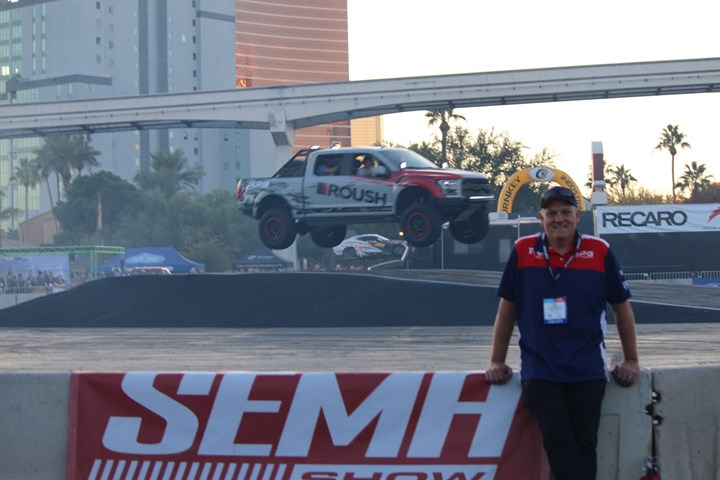
RPG Offroad was founded in 2010 after owner and president Corey Kausch realized there would be demand for offroading components for a new model of the Ford F-150. RPG recently expanded operations to a second production facility in Louisiana to better serve its customers.
Photos courtesy of RPG Offroad.
RPG Offroad develops precision-crafted offroading components using modern-day CAD technology, robotic welding and CNC machined parts. With an annual growth rate of 30%, owner and president Corey Kausch decided to bring machining in-house after outsourced machining costs rose to the point that they were cutting into profits and turnaround times had slowed due to increasing demand. To do this, Kausch had to determine which software to pair with his machines, and he leaned on his background with SolidWorks to make this decision.
Setting Up Shop
Initially, he designed some components for offroading parts and worked with an outside machinist to produce them. He and his wife then assembled the components into kits and shipped them out of their garage. Although that approach sufficed during the company’s first few years, Kausch soon needed to rent space in Irvine, California, and subsequently, a larger facility in Laguna Hills to keep up with exponentially growing demand, prompting Kausch to set up his own machine shop.


“When we established our machine shop in 2019, outsourced machining was costing $40,000 to $45,000 each month and the sheer volume of orders was creating delivery delays,” Kausch says. “For example, we’d often be missing one piece from our suspension kits but had to wait weeks for the external machine shop to machine those missing pieces. That’s when we decided to bring machining in-house.”
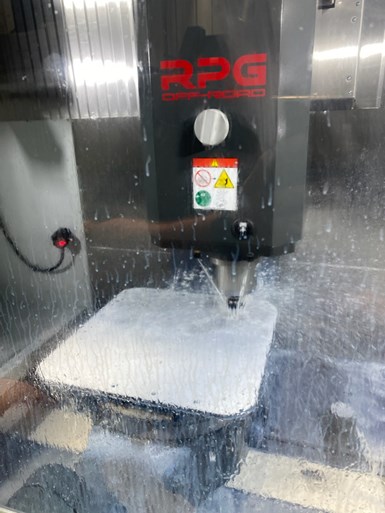
RPG Offroad opened its own machine shop to make parts in-house, shortening machining cycles from a month to four days with the acquisition of several Haas machining centers and the use of SolidWorks and CAMWorks.
When determining which tools to use, Kausch consulted Hawk Ridge Systems, his SolidWorks reseller, as well as a friend who ran a separate machine shop in the area. That’s when he learned that SolidWorks, a software he had been using for 26 years, is completely integrated and part of the HCL CAMWorks machining package.
“I already had a strong SolidWorks mentality, having worked with the software for many years. I was pleased to find that I could use SolidWorks CAM for 2D machining and more capable CAMWorks Professional Multi-Axis Milling software to support four-axis and five-axis machining,” Kausch says.
It didn’t take much more to convince Kaush to use HCL CAMWorks, and he was officially won over by its ability to automatically generate G-code for controlling toolpaths.
Slashing Machining Time
Since beginning operations in its new 17,000-square-foot California facility, RPG has utilized CAMWorks Multi-Axis Machining Solutions to drive two-, three-, four-, and five-axis machining on a variety of Haas lathes and milling machines, which Kausch chose because Gene Haas is a racing and offroading enthusiast. By bringing machining operations in-house and using CAMWorks to program toolpaths, RPG has cut its machining cycles from a month to four days, a reduction of more than 80%.
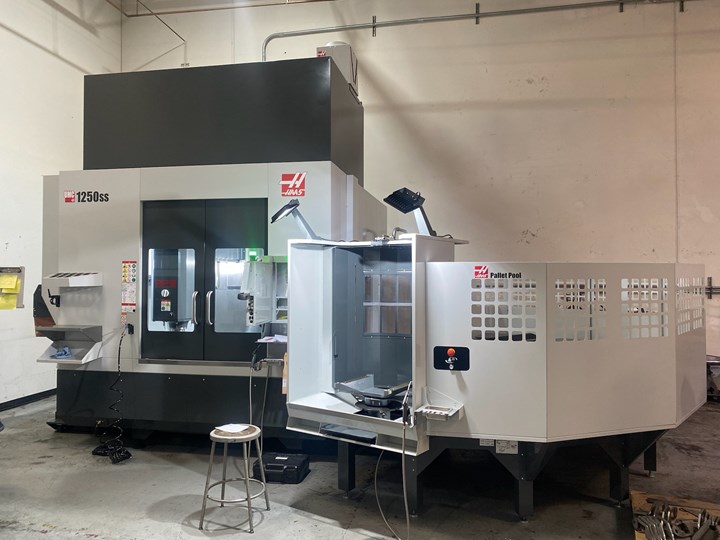
RPG utilizes a variety of Haas lathes and milling machines in its 17,000-square-foot facility in California. With CAMWorks integration inside SOLIDWORKS and automation tools, RPG has significantly reduced machining cycle times.
“Instead of ordering machined parts from an outside provider and waiting weeks to receive the part, we keep the machines running and the spindles turning,” Kausch says. “For example, we can set up a run on Friday afternoon and have the machine run all weekend until Tuesday morning.”
To keep machines running all weekend, RPG uses bar feeders on its lathes and equips its Haas UMC-1250SS five-axis mill with a 6+1 pallet pool.
While learning how to machine parts was a little intimidating at first, Kausch decided to take the jump because of his familiarity with SolidWorks and its integration with CAMWorks. He says the CAMWorks Simulator allows him to visualize how a job will run and tweak the model by changing a dimension in SolidWorks if necessary, and the G code will update automatically to reflect the change.
Increasing Throughput, Extending Tool Life
Once established, RPG’s CAMWorks-driven machine shop enabled the company to bring all component machining operations in-house, driving down costs and eliminating delivery delays while simultaneously boosting throughput to meet growing demand.
“In addition to generating time and cost savings — as well as improving part availability — the move to CAMWorks has provided the productivity gains that we need to maintain and sustain growth,” Kausch says.
RPG has not only reduced production time, but it has also utilized CAMWorks VoluMill high-speed machining software to extend tool life. Kausch noted a job that was set up with VoluMill on a lathe using a ⅝-inch round end mill to make a ½-inch cut. When the shop tried completing this job without VoluMill, the tool lasted around two hours. With VoluMill, RPG extended tool life to 170 hours, running the job 10 hours a day for 17 days.
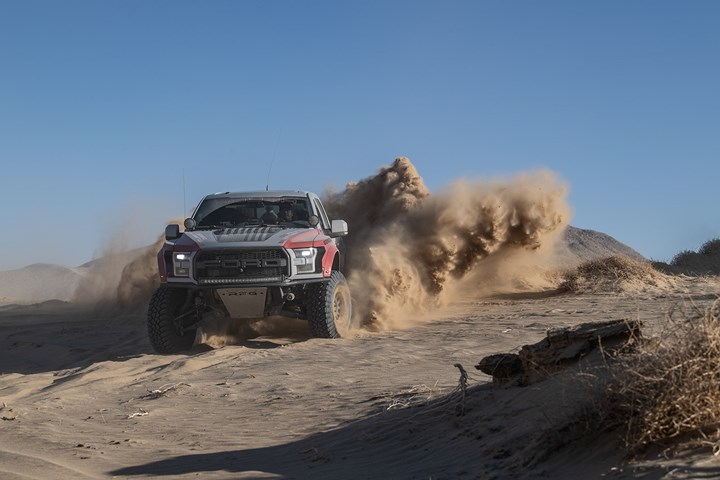
RPG Offroad designs and manufactures off-road suspension upgrades for the Ford F-150, Raptor, Ranger and Bronco. RPG originally outsourced its machining, but soon established its own machine shop to keep up with increasing demand.
Establishing a Second Production Facility to Support Growth
While moving machining operations in-house in 2019 helped RPG increase throughput and initially manage growth associated with an increasing number of customer orders, the company is in the process of establishing a second production facility near New Orleans to both sustain its growth trajectory and cut shipping costs.
“With business growth of 30 percent each year, we need to bring on additional production and logistical resources to manage growth effectively,” Kausch says.
While his immediate goal in setting up a second machine shop in Louisiana is to cut shipping costs in half, Kausch says having more than one facility will help RPG better support and manage growth.
“CAMWorks has helped us save time and money while boosting machining throughput, and we believe CAMWorks will continue to help us streamline feeds and speeds at both facilities so we can continue delivering quality products at a fair price for our offroading customers,” Kausch says.


Related Content

How a Family-Owned Tooling Company Competes with Global Giants (Includes Video)
Not ready to go digital? Consider this: With Siemens NX ecosystem, precision shop D’Andrea cut its programming time by 50% and is able to compete globally—even against industry giants.
Read More
Large-Format Machining With Small Cutting Tools and Dynamic Motion
Napoleon Machine, a defense contractor that provides parts for the M1 Abrams tank, recently took advantage of a CAM feature that allowed the company to streamline its cutting strategies and program offline. Here’s how the shop cut cycle times nearly in half with its large-format five-axis machining operations.
Read More
Blueprints to Chips: CAD/CAM Tips and Tricks
This collection of articles delves into the latest CAD/CAM innovations, from AI-driven automation and optimized tool paths to the impact of digital twins and system requirements.
Read More
Faster Programming and Training Helps Automotive Shop Thrive
Features that save on training, programming and cycle times have enabled Speedway Motors to rapidly grow and mature its manufacturing arm.
Read MoreRead Next

The In-House Initiative
OEMs experiencing outsourcing issues might consider this manufacturer’s approach to establishing an appropriate level of in-house machining capabilities.
Read More
Innovate Faster with In-House Manufacturing
"The Edge Factor's" tour of judges recently visited Cane Creek Cycling Components to discuss the company's decision to bring previously outsourced machining work back in-house.
Read More
OEM Tour Video: Lean Manufacturing for Measurement and Metrology
How can a facility that requires manual work for some long-standing parts be made more efficient? Join us as we look inside The L. S. Starrett Company’s headquarters in Athol, Massachusetts, and see how this long-established OEM is updating its processes.
Read More