
Greenleaf Introduces Xsytin-360 End Mills
Greenleaf's Xsytin-360 solid ceramic end mills offer high material removal rates and increased productivity, according to the company.
.JPG;width=70;height=70;mode=crop;format=webp)
Share


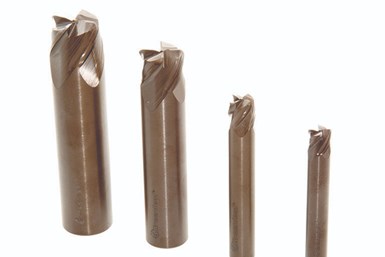
Greenleaf Corporation has introduced a line of solid ceramic end mills: Xsytin-360. The end mills are composed of Xsytin-1, which allows users to apply chip loads similar to solid carbide end mills with higher speeds common to ceramic machining, according to the company.
Greenleaf’s Xsytin-1 material was designed to provide high wear resistance and thermal shock resistance. According to the company, Xsytin-360 end mills have shown high material removal rates and resulted in increased productivity on a range of materials. These end mills are suitable for machining a variety of materials, including high-temperature alloys, 3D-printed sintered high-temperature alloys, hardened steels, ductile cast irons and compacted graphite iron (CGI). Greenleaf states that, in hardened steels, Xsytin-360 end mills have tool life equal to high-performance carbide end mills when run at high-end speeds (11,460 RPM), while also removing over 73 cubic inches of material.
According to Greenleaf, features include:
- A flute design that is reported to minimize cutting forces, reducing vibrations and optimizing tool life
- High strength and wear resistance at extreme feed rates
- Four-flute design for maximum material removal in slotting, pocketing and profiling applications
- Regrind capabilities
- A broad application range
- Increased feed rate capability and broad speed range
- Increased material removal rates (MRR) of 100% over carbide
The mills are suitable for machining materials in the aerospace, automotive, die and mold and power generation industries.
Related Content
-
Shoulder Milling Cuts Racing Part's Cycle Time By Over 50%
Pairing a shoulder mill with a five-axis machine has cut costs and cycle times for one of TTI Machine’s parts, enabling it to support a niche racing community.
-
Picking the Right End Mill
Kennametal global product manager Katie Myers explains how cutting tool features can impact machining strategies for different materials.
-
Roughing First: New Strategies for Blisk Machining
Aerospace shops looking to cut cycle time and tool wear on integrally bladed rotors often focus on finishing. But rethinking the roughing stage can increase how much material can be safely removed while accelerating throughput.


