
ModuleWorks and Rafinex Synchronize Systems
In effective synchronization, topology optimization and toolpath planning enable more effective design-to-manufacture processes.

Share


Phillips Corporation - Education
Featured Content
View More


Phillips Corporation
Featured Content
View More


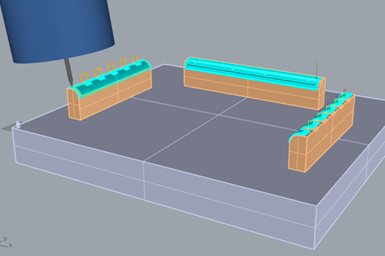
Rafinex, developer of advanced numerical optimization software solutions, and ModuleWorks, developer of CAD/CAM software components, have integrated ModuleWorks’ toolpath calculation technology with the Rafinex software algorithm suite. In effective synchronization, topology optimization and toolpath planning enable more effective design-to-manufacture processes. This is reported to eliminate late change requests, avoid machining and robotic problems during the design phase and reduce engineering and manufacturing costs in subsequent processes.
Rafinex stochastic topology optimization anticipates real-life variability in material loads and material properties to help engineers design parts for high-performance applications in the aerospace and automotive industries, among others. The toolpath algorithms automatically calculate the optimal, material-independent toolpaths for different additive and subtractive processes (including robotic applications), which means manufacturing feasibility is analysed during design optimization.


"The accurate, effective and results-oriented approach of Rafinex is reflected in their projects and products”, says Lothar Glasmacher, head of additive & process technologies at ModuleWorks. “By combining ModuleWorks toolpath technology and Rafinex advanced optimization algorithms, we have significantly accelerated machine- and robot-based production processes."
In the next stage of their cooperation, ModuleWorks and Rafinex are incorporating inverse kinematics to calculate an optimal continuous toolpath for each component.
“Leveraging ModuleWorks’ toolpath planning in combination with our topology modelling software enables our customers to go a decisive step further and equally anticipate machining constraints and targeted cycle times when designing the optimal robust component,” says André Wilmes, CEO at Rafinex.
Using this synchronized workflow, engineers can identify design features that are too difficult or impractical to manufacture for any given production process and adjust the design accordingly. Spotting potential problems at this early stage can save considerable costs and speed up both prototype and series production.
Related Content
-
Why Manufacturers Are Reassessing Their CAD/CAM and MES Strategies
As disconnected systems create disconnected operations, Tebis SmartOps brings automated geometry creation, toolpath generation and process sequencing into one integrated CAD/CAM environment — making advanced automation accessible to manufacturing teams, not just software developers.
-
10 Robotic Solutions You Can Find at IMTS 2026
Discover how today’s robots and cobots are making it easier than ever to automate tasks, free up skilled workers, and run machines unattended – even in small and midsized shops.
-
SolidCAM iMachining and Technology Wizard: Faster Machining and Longer Tool Life
Smarter toolpaths to tackle modern machining challenges.


