
Renishaw Offers High-Speed Comparative Gaging System
The Equator system enables high-speed scanning and rapid moves between features, while retaining stiffness that delivers point-to-point repeatability for accurate gaging.

Share


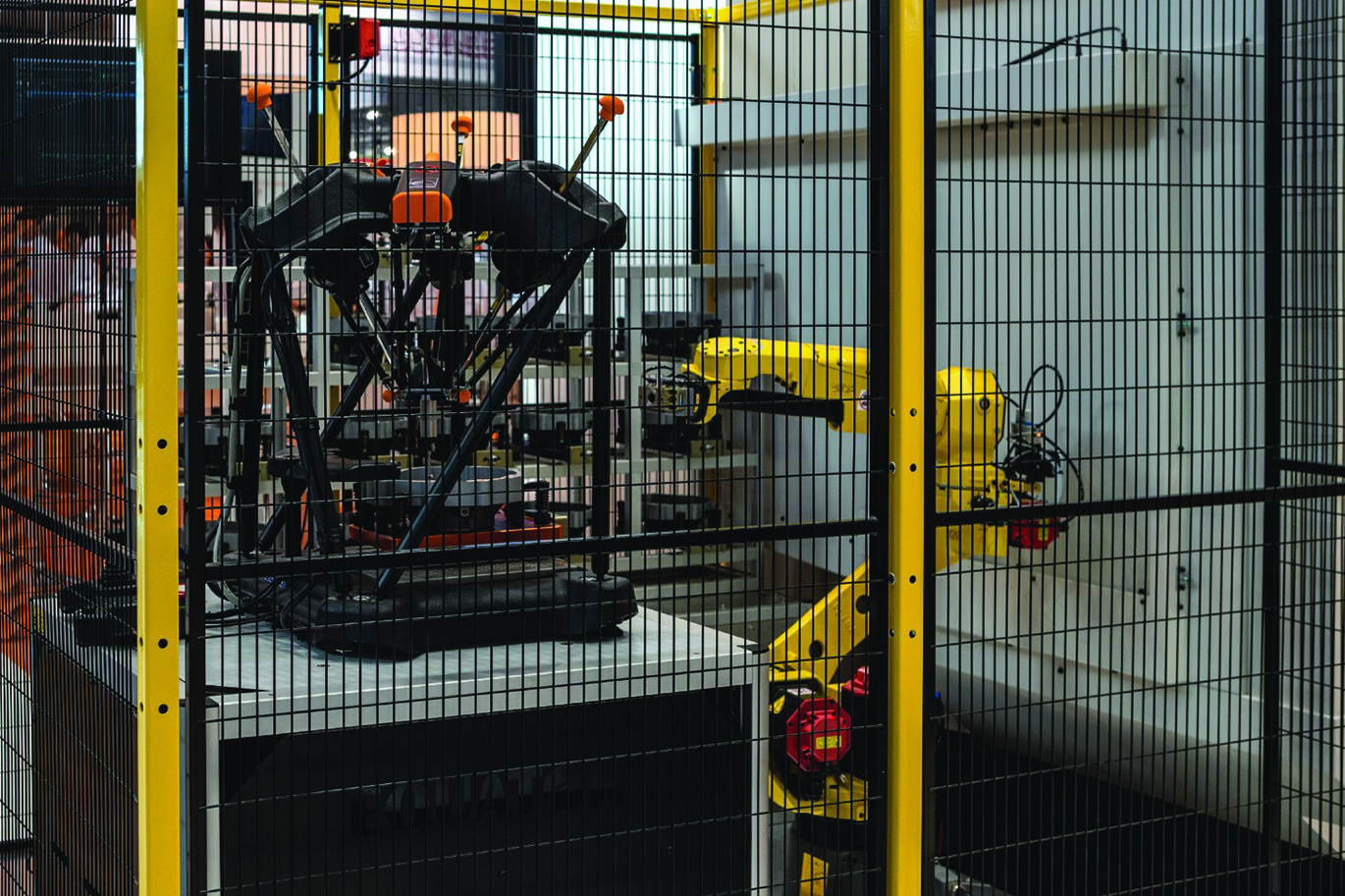
Renishaw’s Equator system features a patented, low-cost design and high-speed comparative gaging capabilities for inspection of manufactured parts. According to Renishaw, it was developed and proven on the shop floor in collaboration with industry-leading companies in the automotive, aerospace, defense and medical sectors.
The Equator system uses a master (known) part and couples it with a highly repeatable and versatile structure for fast, flexible gaging on the factory floor. Along with Renishaw’s Intelligent Process Control (IPC) feedback, the Equator system allows the gaging to update the machining process for immediate feedback without a need for manual offset adjustments.


Based on a scalable and adaptable “parallel-kinematic” structure, the Equator system allows high-speed scanning and rapid moves between features, while retaining stiffness that delivers point-to-point repeatability, critical for accurate gaging.
Installation of an Equator system reportedly takes only minutes, and an operator can switch between gaging of different parts in seconds. Reconfiguration of the gaging system to accommodate part design changes, or to measure new parts, is possible in a fraction of the time needed for conventional custom gaging, using industry standard DMIS programming.
Equator systems are available with two levels of software; a programmable version for production engineers to create DMIS programs and, at a lower price, a shop floor system that allows those programs to be executed but prevents operators from making modifications. Both software levels include a Modus Organizer operator front-end software. In the programmable version, Modus Equator programming software enables engineers to rapidly create gaging routines for any part — simple or complex, prismatic or free-form.
Related Content
-
More Surface Finish Parameters at Hand
Measuring surface finish at the point of manufacture is often done by the same machinist who is manufacturing the part. They need tools that meet test requirements and are easy to use.
-
Understanding New Surface and Profile Standards
Standards for surface finishes and profiles are not static; they change as technology changes or new processes come along that need to be considered.
-
Marathon Precision’s Engineering Playground: One Shop’s Secret to Sustaining High Tech, Low-Volume and High Morale
Half an airplane on the wall, a ten-foot metal dragon, and a full-blown recording studio might not scream “manufacturing efficiency,” yet Marathon Precision proves otherwise. Here’s how forging, complex CNC operations and staff-driven creative projects combine to fuel the shop’s productivity and profitability.


