
Siemens Outlines Five Stages of Digitalization in EMO 2017 Preview
Siemens presented five stages of digitalization with end-to-end solutions from its integrated portfolio at a preview of its 2017 EMO exhibit.

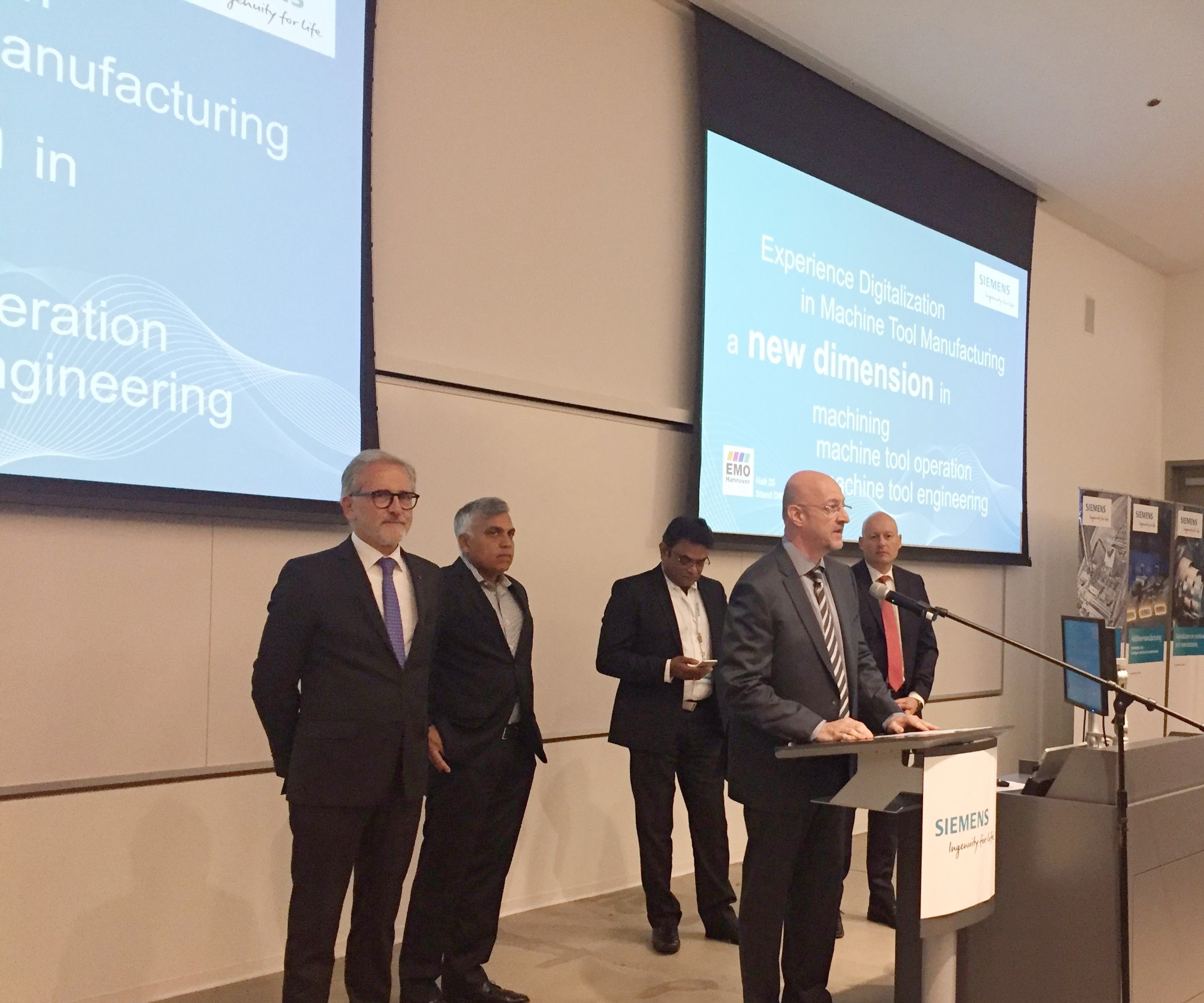
Because Siemens works with machine tool builders and machine tool users, it developed corresponding, parallel tracks for both perspectives.
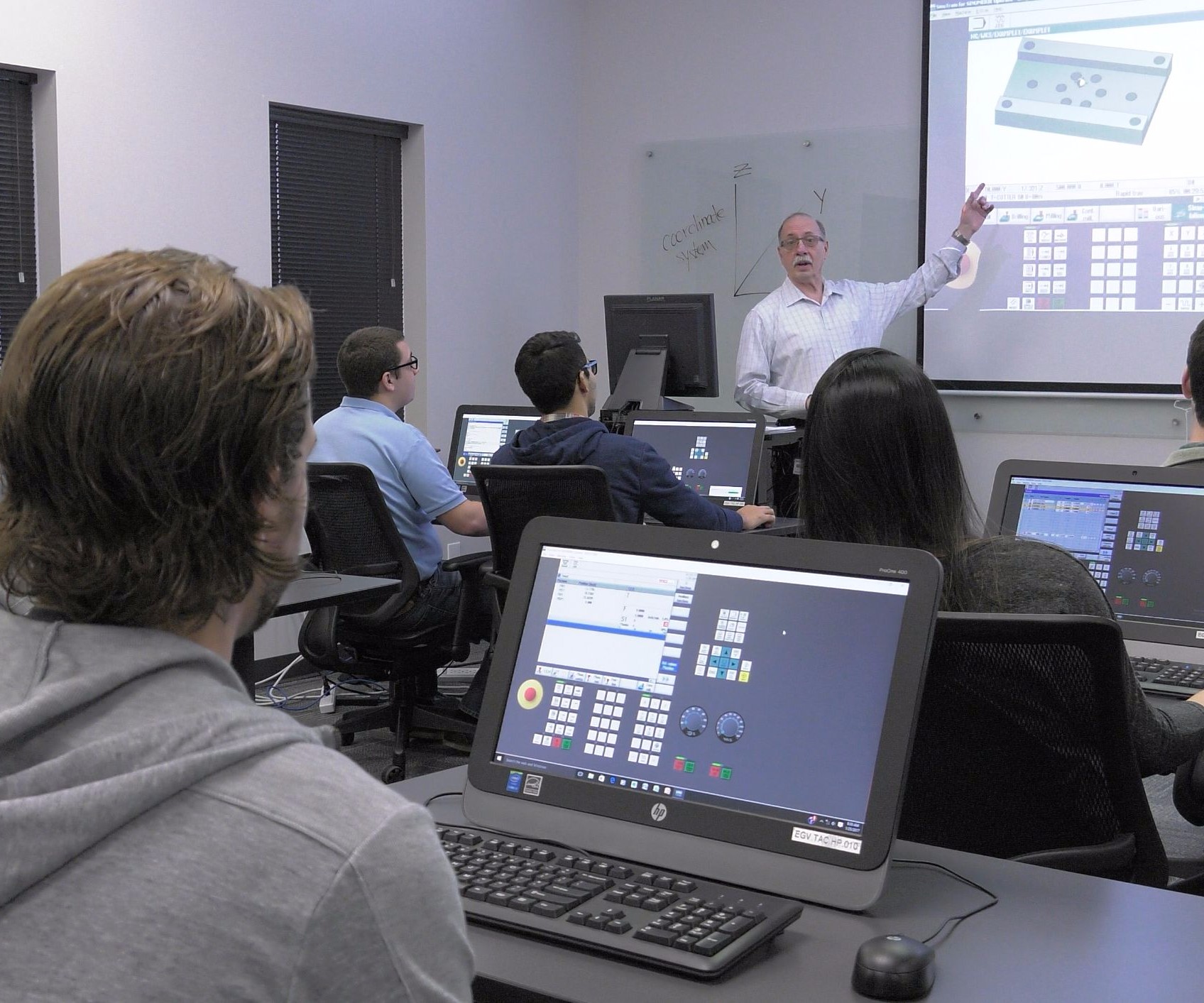
Siemens’ offerings include SinuTrain software for training CNC users, as well as offline learning opportunities at the company’s newly opened Technical Application Center (TAC) at its Elk Grove Village facility near Chicago. It also established a virtual TAC with webinars and virtual training courses.
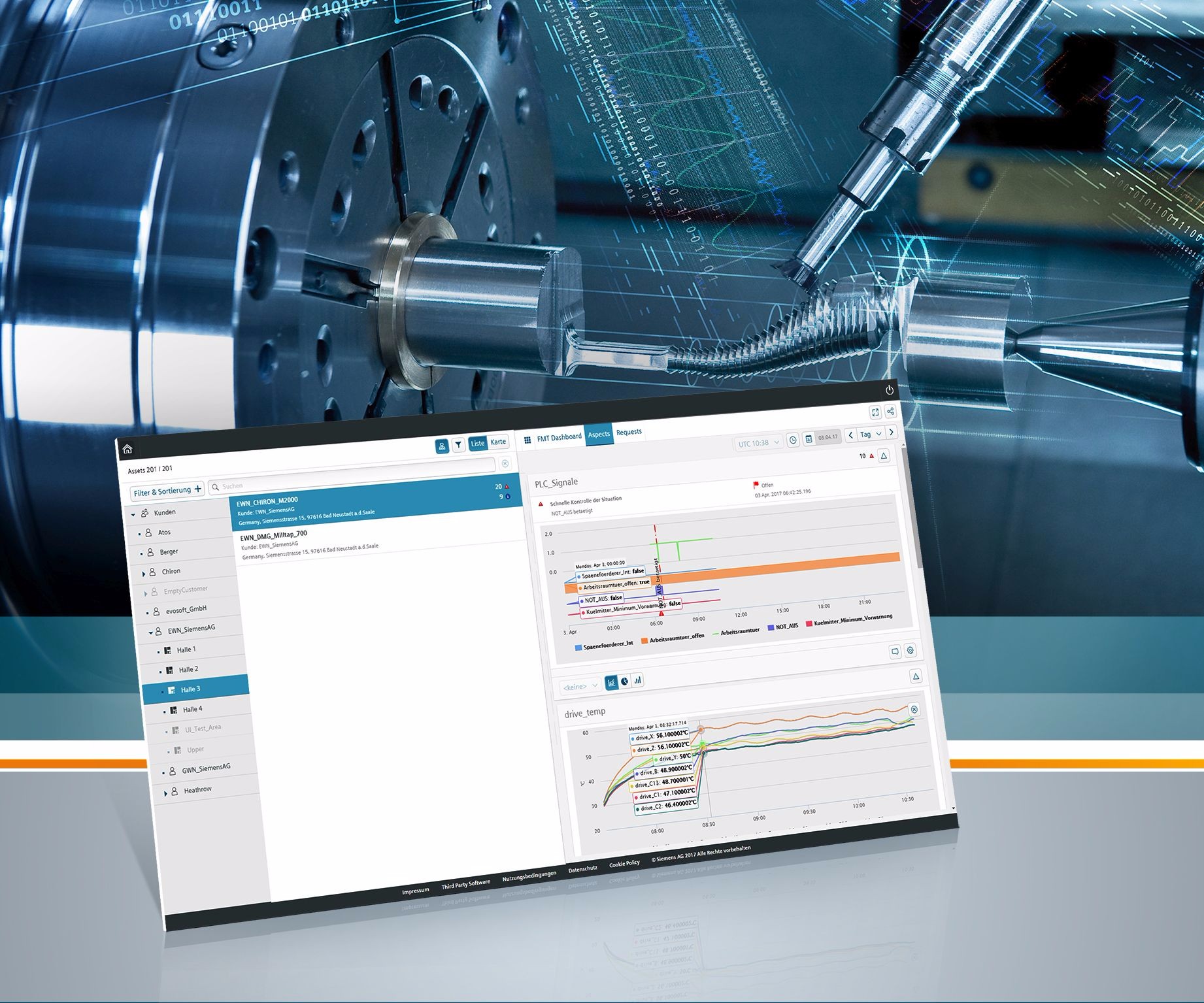
Siemens’ EMO exhibit will feature MindSphere, its cloud-based operating system that enables users to gain value out of the data they upload by building and using applications.
Share


The benefits of digitalization are clear, but the process of moving in that direction can be overwhelming. So many parts and pieces, from components of machine tools to management software, can be individually digitalized that planning a transition to Industry 4.0 can be difficult.
Through R&D and acquisitions, Siemens has been building an integrated portfolio of end-to-end solutions to enable both product manufacturers and machine tool builders to become truly digital enterprises. These solutions will be the focus of the company’s 2017 EMO exhibit, which it previewed at a press event at the Digital Manufacturing and Design Innovation Institute (DMDII) in Chicago.
According to the company, the key to staying competitive is a holistic approach that integrates the entire value chain, creating a “digital twin” of the value chain that exists in the virtual world. Siemens breaks down the value chain into five stages, and offers solutions for digitalization at each stage. Because the company’s customers are both product manufacturers and machine builders, it developed corresponding, parallel tracks for both perspectives. Here is an overview of the steps:
- Product Design/Machine Concept: Whether the user is making products or CNC machines, the first step is concept and design. This is digitally executed for product design using CAD/CAE/CAM software, such as Siemens’ NX, and for machine concepts with NX Mechatronics Concept Designer.
- Production Planning/Machine Engineering: Once the design or concept is finalized, manufacturers and builders need to plan and validate the procedures to make the product. For product manufacturers, this step can be accomplished digitally within the CAM software. During this stage in machine engineering, machine builders have many considerations, including drives, such as Sinamics, as well as the drive’s design and configuration and programmable logic controller code generation via Sizer, Step 7 and the company’s Totally Integrated Automation (TIA) portal.
- Production Engineering/Machine Commissioning: According to the company, this step for product manufacturers includes generating the NC code and validating the NC program, which can be done with the Virtual NC Controller Kernel (VNCK) embedded in the NX software. The company also enables virtual commissioning for machine builders to validate machining processes through its Mechatronics Concept Designer, Simit simulation software’s hardware-in-the-loop simulation, NX Virtual Machine and Run MyVNCK.
This phase also includes user training, for which the company offers SinuTrain CNC training software. Siemens also offers offline learning, which the company supports with its new Technical Application Center (TAC) at its Elk Grove Village facility, the opening of which coincided with the event at the DMDII. The new TAC offers learning opportunities such as classroom and online training for machine tool dealers, importers and end-users. In keeping with its focus on digitalization, the company also offers a virtual TAC with webinars and virtual-training courses.
- Production Execution/Machine Operation: Digitalization can benefit production execution (performing the planned machining operation) through Sinumerik control units and data analysis from Analyze MyPerformance. The company also offers a range of ways to put machining operations on a digital basis, including control panels and Create MyHMI/WinCC for customization, and features like nodding compensation, collision avoidance and Analyze MyWorkpiece/Toolpath for performance.
- Services/Machine Services: Siemens also offers digital services to product manufacturers and machine builders. Product manufacturers can use Analyze MyCondition for shopfloor viewing at the CNC for preventative maintenance. For machine builders, Siemens offers CNC Shopfloor Management software and Sinumerik Edge for data processing near the source.
Both product manufacturers and machine builders can also benefit from the company’s MindSphere cloud-based operating system. MindSphere includes an ecosystem that enables users to build and share applications, creating value out of the data that customers upload. For example, the company has developed a Manage MyMachines app, which is designed to enable operators to view machine data via the cloud.

.png;maxWidth=300;quality=90;format=webp)


Related Content

4 Commonly Misapplied CNC Features
Misapplication of these important CNC features will result in wasted time, wasted or duplicated effort and/or wasted material.
Read More
Orthopedic Event Discusses Manufacturing Strategies
At the seminar, representatives from multiple companies discussed strategies for making orthopedic devices accurately and efficiently.
Read More
Shop Reclaims 10,000 Square Feet with Inventory Management System
Intech Athens’ inventory management system, which includes vertical lift modules from Kardex Remstar and tool management software from ZOLLER, has saved the company time, space and money.
Read More
10 Robotic Solutions You Can Find at IMTS 2026
Discover how today’s robots and cobots are making it easier than ever to automate tasks, free up skilled workers, and run machines unattended – even in small and midsized shops.
Read More