
Arcing away from Near-Net Forging
An electrical arc process joins a field of additive manufacturing technologies that could one day provide aerospace manufacturers with alternatives to near-net-shape forgings.

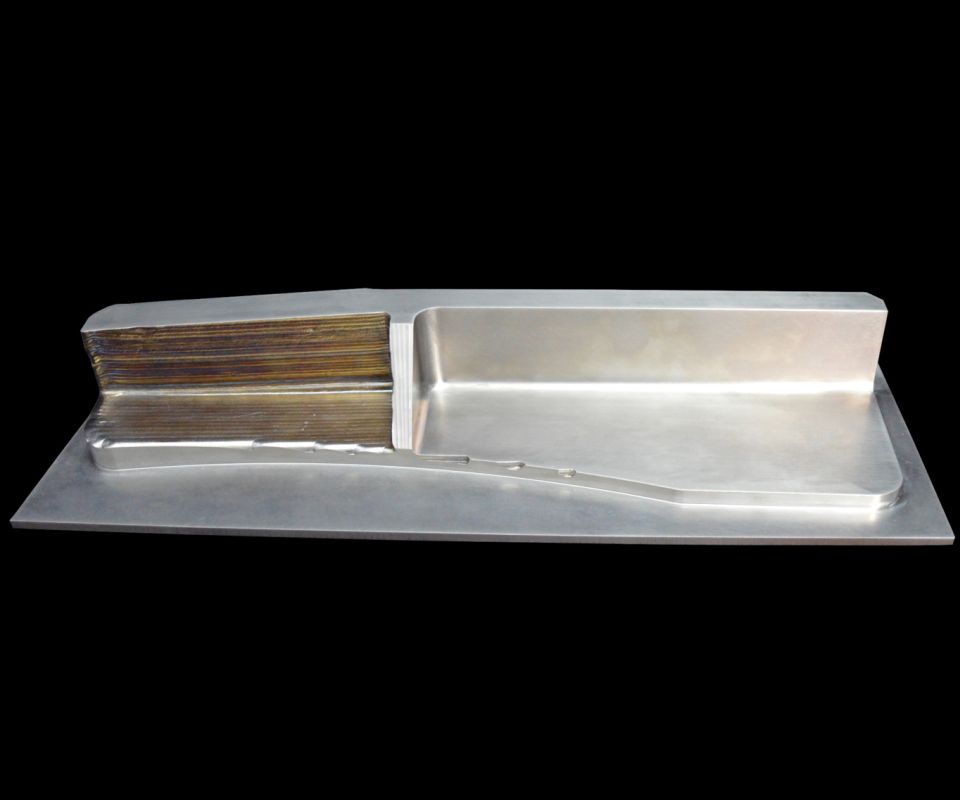
Rapid additive forging (RAF) technology promises to compress the product development cycle because unlike forging, building parts layer by layer requires no tooling.
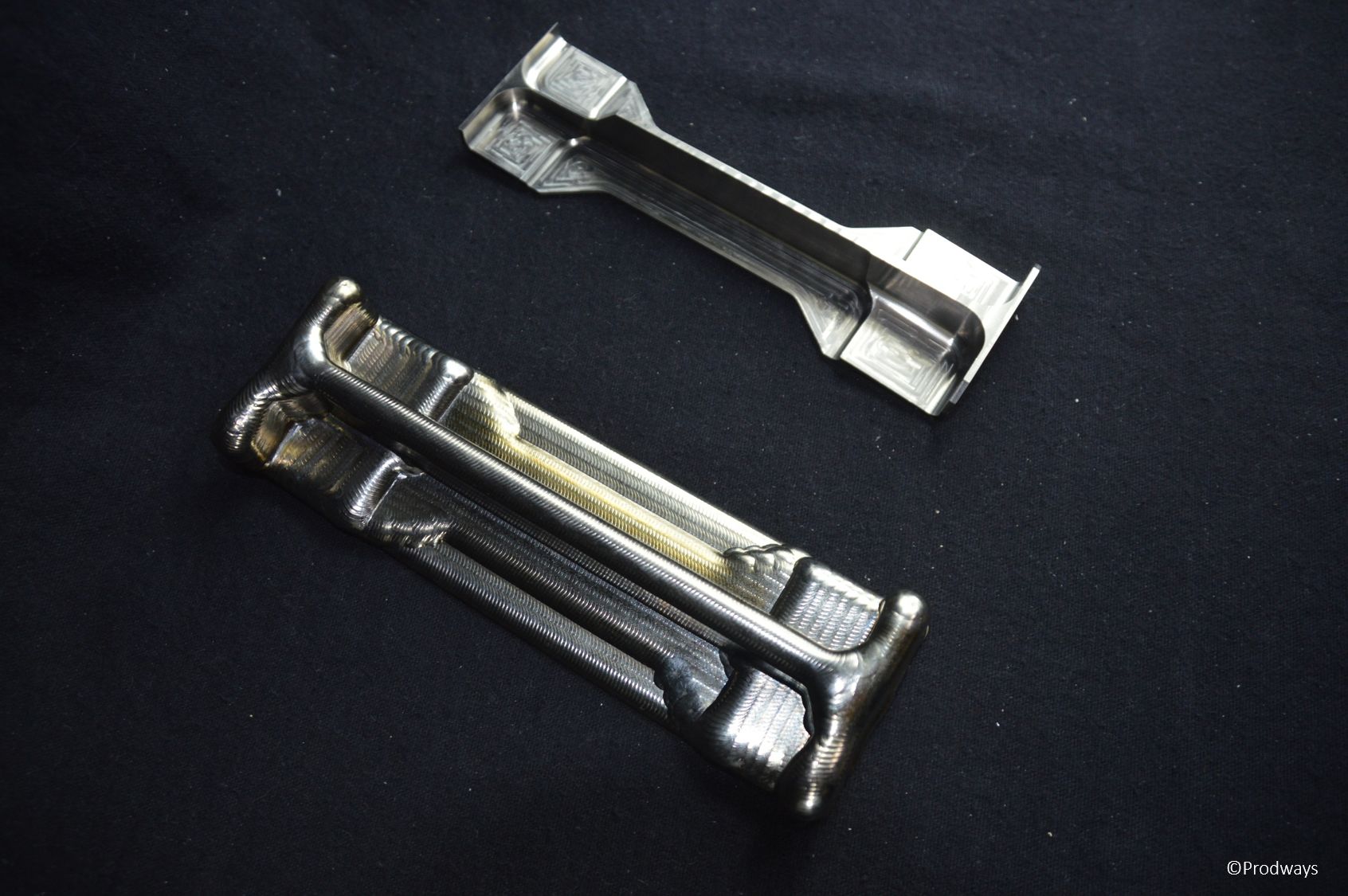
The process also reduces material waste and finish-machining because parts are closer to net shape.
Share


Phillips Corporation
Featured Content
View More


Phillips Corporation - Education
Featured Content
View More

In the future, pounding heated metal into submission will not be the only viable means of producing certain near-net-shape aerospace components. According to various suppliers, additive manufacturing technology continues to progress toward the same standards for material strength and reliability as forging. They also claim that these freeform deposition processes take less time than forging (a matter of hours for larger components) and bring parts even closer to final geometry. By eliminating the need for tooling and reducing the time and cost required for finish-machining, these forging alternatives promise to compress the front end of the development cycle, reduce the overall production cost of aerospace structural components, and, eventually, facilitate new part designs that would not be feasible with forging.
One of the most recent examples, Rapid Additive Forging (RAF) technology, offers cost savings ranging from 30 to 50 percent on various titanium parts, says Olivier Strebelle, deputy chief executive officer of strategy and business development at Groupe Gorgé, the parent company of RAF technology developer and fellow French firm Prodways. Similar to other metal deposition techniques, the deposition head and the wire material feedstock move together throughout the workzone. Unlike processes that build geometry up from beds of powder, the only restriction on part size is the travel limit of the deposition head, Mr. Strebelle says. Although final forms are not as detailed as those produced via powder-bed sintering, they’re more than detailed enough to replace forgings. Metal deposition processes are faster than powder-bed technologies, too.


One of the primary areas in which these freeform material deposition techniques differ is the means of melting the material. RAF uses an electric arc similar to the technology employed by gas-metal-arc welding systems, and testing so far has focused primarily on titanium. The deposition head travels on a robot from Commercy Robotique, another subsidiary of Groupe Gorgé, within an enclosed atmosphere of inert gas. Initial testing shows potential speed advantages compared to laser systems because more power is available, Mr. Strebelle says. As for electron-beam sintering systems, “Our assessment is that arc-based technologies are more robust,” he continues. “This is based on our welding experience, where arc-based robots are more reliable.”
However, he emphasizes that the process is still maturing. Engineers are still working toward matching the highest standards of forged-part tensile strength, porosity and other properties. Still, they are getting close. “It could work already for parts that are not of the highest class,” he says, adding that proving the process out for flight-ready parts is likely only a matter of time. In fact, at the time of this writing, Prodways was reportedly working with an aerospace client to qualify parts that could be flying by 2019. New materials, such as aluminum and Inconel, will also undergo further testing. The company is also considering how a RAF system for production might look different than one for prototyping, and how the process might be better integrated with machining, possibly via a hybrid additive/subtractive machine. Size capabilities will most certainly expand, he says, with the next generation systems’ increasing the limit from 70-cm to 3-meter parts.
All of this work is being conducted in Europe, but Mr. Strebelle says the company could easily supply blanks produced via RAF technology from its North American headquarters in Minneapolis, Minnesota. As the process matures, he says the technology will likely follow the same path as the company’s other, mostly plastics-focused additive manufacturing offerings, with Prodways eventually moving to offer the RAF systems themselves in addition to RAF production services.


Related Content

Gear Surface Texture Is More Important Than Ever
The interactions of gear surfaces are becoming increasingly important in applications such as automotive electric motor drive systems and aircraft turbines.
Read More
Inside a Next-Gen Aerospace Machine Shop Running 24/7 Lights-Out | Shop Tour
Lights-out manufacturing boosts throughput while ensuring machinists take on only the tasks that matter. Acutec Precision Aerospace knows this—and uses it as the foundation for an innovative, successful shop.
Read More
Machining with a Mission
Learn how veteran-owned shop Win-Tech not only excels in aerospace and defense manufacturing with CMMC level two compliance, but also transforms lives by hiring veterans and encouraging students to explore manufacturing.
Read More
How Precision Blanks Help This Aerospace Shop Build Better Parts
Internal stress in thin metal parts can lead to warped components and scrapped work. Matrix Machine found a better way by sourcing precision-ground blanks from TCI Precision Metals. Here’s how that decision freed up capacity and made critical parts more predictable.
Read MoreRead Next

WEBINAR: From Machine Data to Guided Action: How Modern Shops Are Closing the Execution Gap
In this webinar, MachineMetrics Product Manager Josh Fish is joined by Pindel Global Precision's Thomas Deslongchamps, for a candid look at what closing the execution gap actually looks like inside a precision machining shop.
Read More